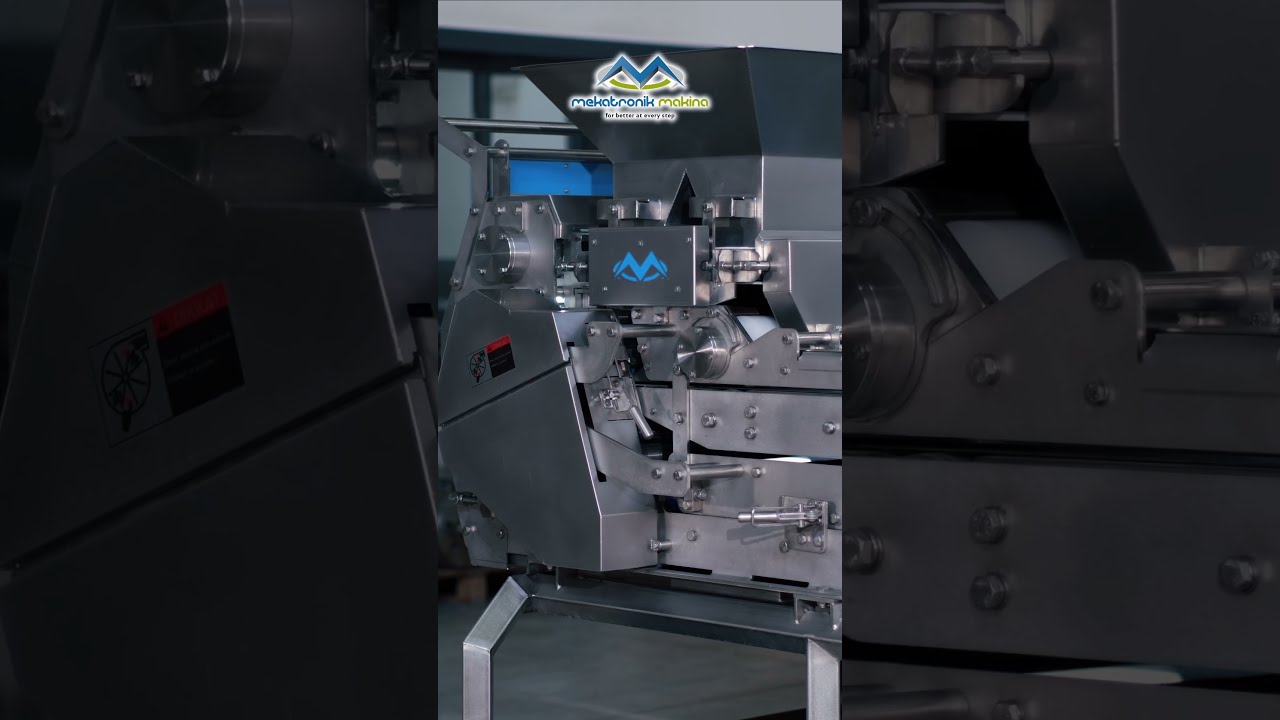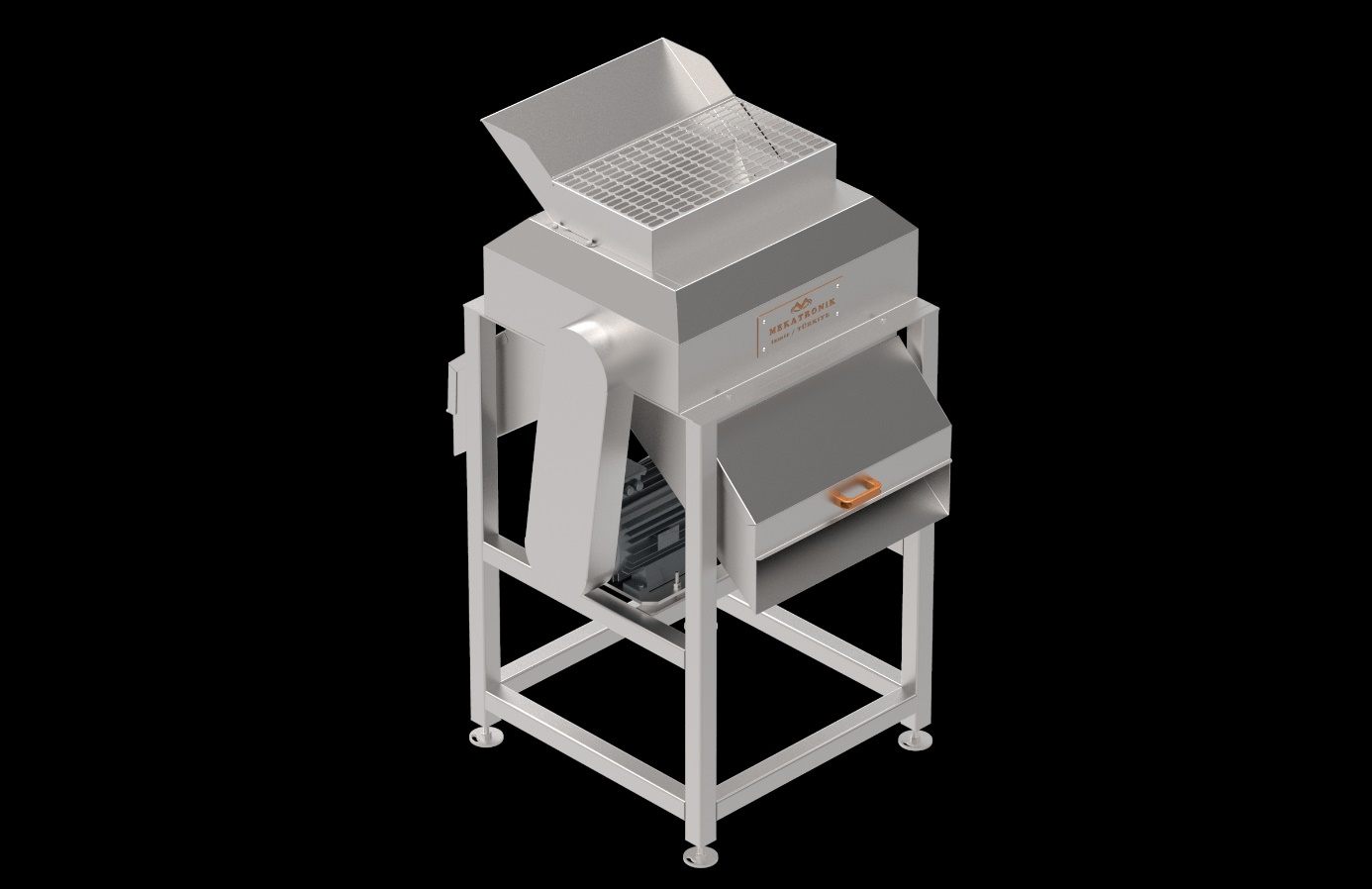
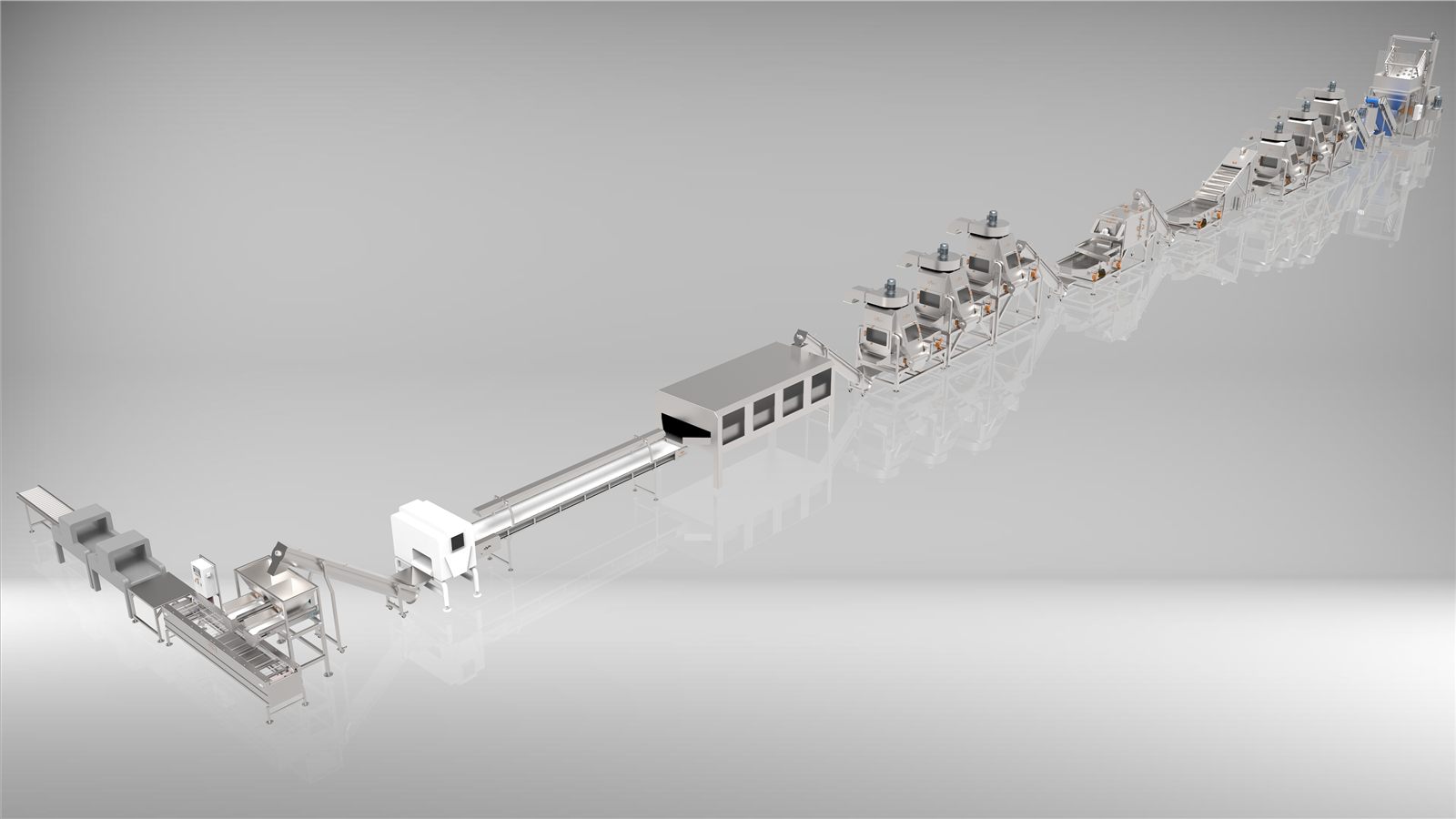
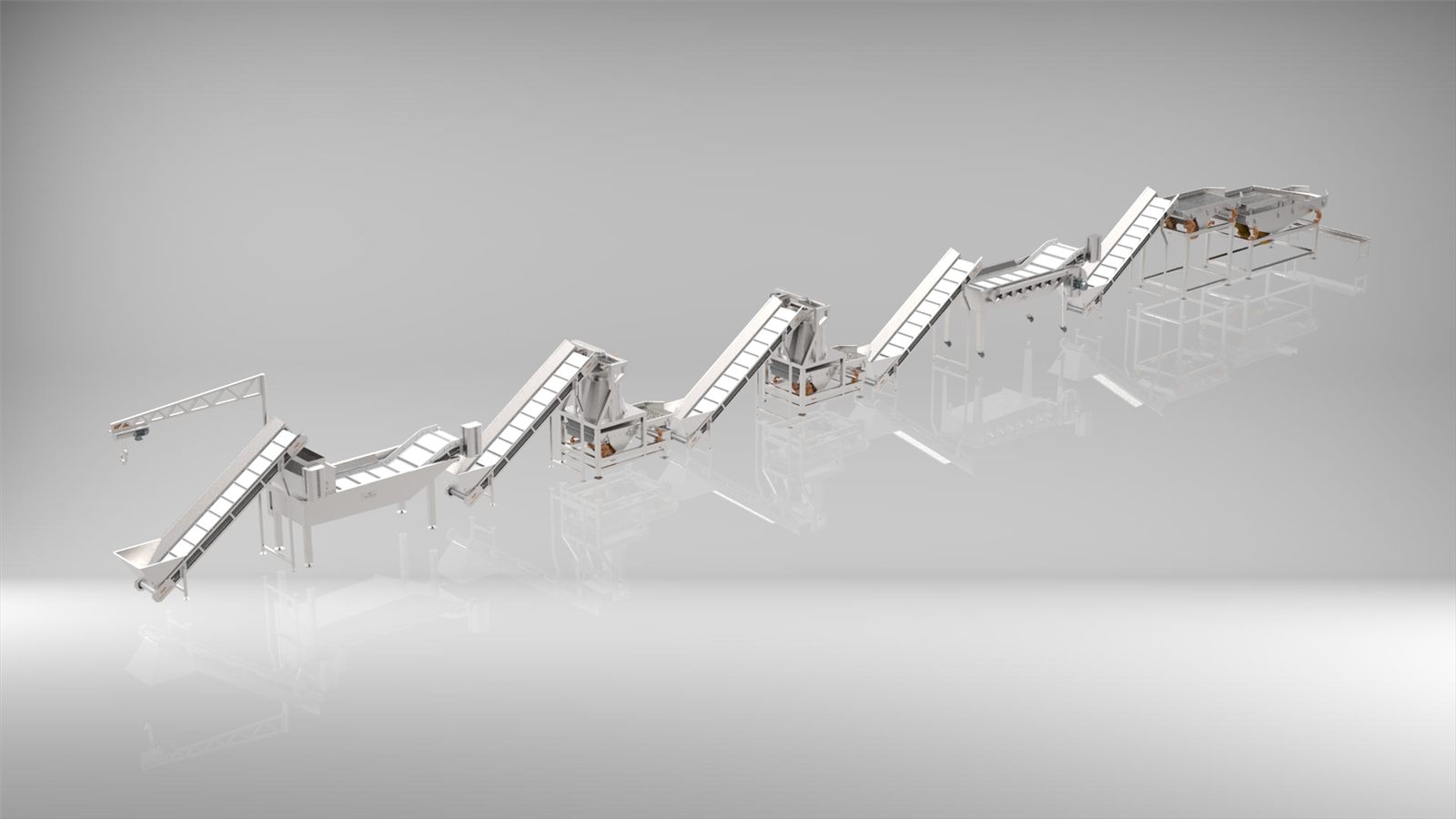
One of the questions that comes up most often in date processing lines is why pitted dates do not always give the same result in the chopping machine. Even with the same machine, the same blade set and the same settings, the size and shape of the cut pieces can differ. The reason is usually not the chopping machine but the change in the physical structure of the date once the pit has been removed.
01
Why does the geometry change once the pit is out?
The pit acts as a natural support in the centre of the date. Before pitting, the geometry of the fruit is more stable; once the pit is taken out a cavity is left in the middle and the date is no longer a solid, rigid fruit. In soft dates especially, pressure applied from outside can flatten the product, close it inwards, change its shape or compress it before it even reaches the cutting section.
In chopping machines, one of the main factors behind cut quality is the form in which the product reaches the blades. Take an 8x8 mm dice as the target: in theory the blade geometry can produce that cut, but if the date has been crushed or flattened before it reaches the blades, it is not possible for every resulting piece to be geometrically identical. The blade dimension is fixed; the geometry of the product entering the blade is not. That distinction is one of the keys to understanding the date chopping process.
02
How do moisture and the pitting method affect the cut?
As the moisture content of the date rises, the product generally becomes softer and more open to deformation. Drier dates behave relatively stably against the blade, while high moisture, soft dates can be compressed or crushed during cutting. The same machine can therefore give different results on two dates with different moisture levels, which is why capacity and cut quality have to be assessed with the real moisture content and texture of the product in hand, not just the variety.
How the pit is removed also has a direct effect on the chopping step that follows. If too much mechanical pressure is applied during pitting, the product can be deformed before it ever reaches the chopping machine. Ideally the pit is removed with minimum deformation, minimum product loss and a controlled opening. If the date is crushed during pitting, the cutting machine cannot fully compensate for it, so in an industrial line pitting and chopping should never be evaluated independently of each other.
03
Why is hair singeing done before pitting?
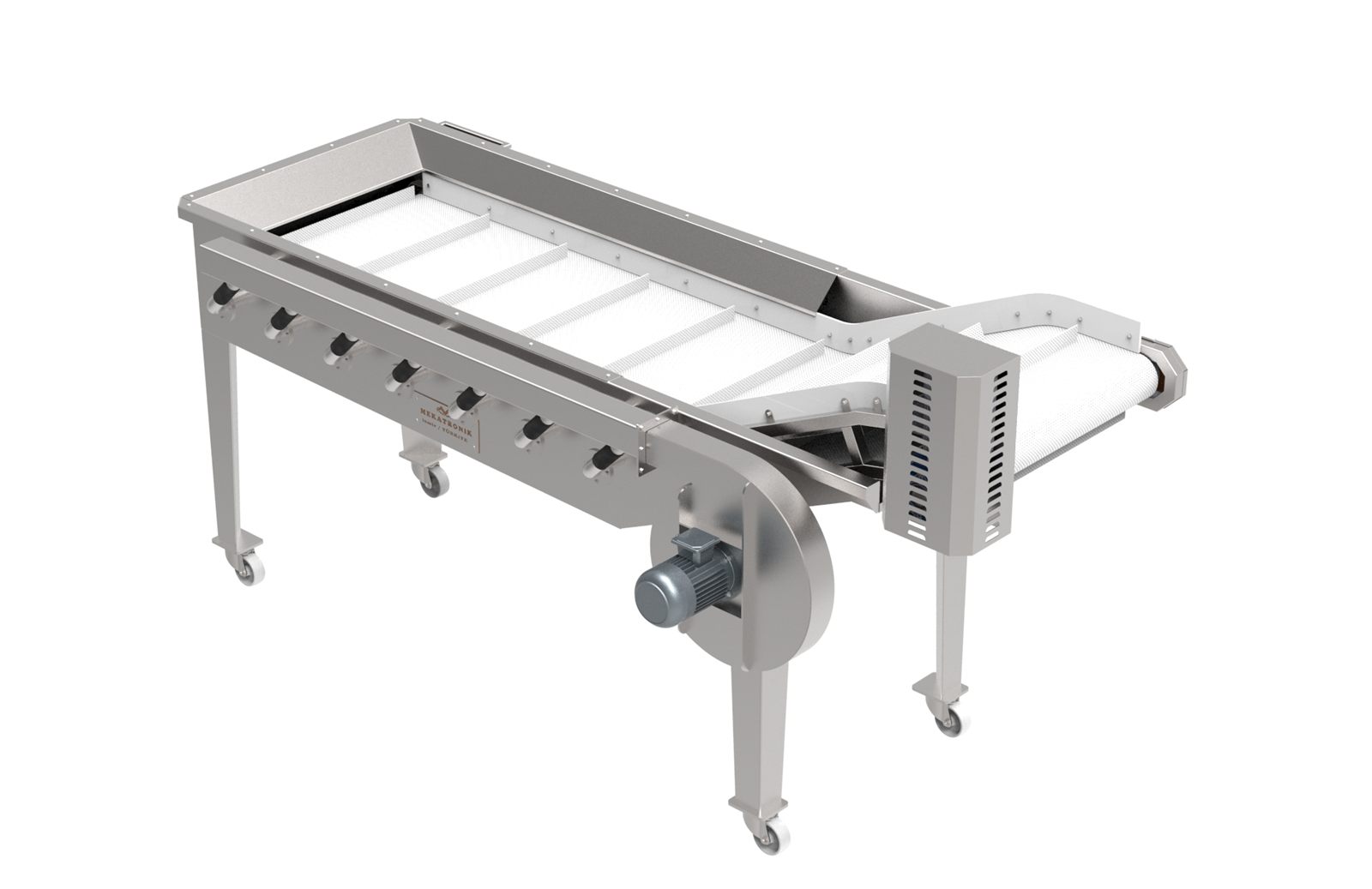
Fine hairs, down and fibre like material, either naturally present on the date surface or picked up during harvest, transport and storage, can affect final product quality. Surface cleanliness matters in particular for dates that will be pitted and then cut into cubes or julienne. For this reason industrial lines can include a hair singeing line; the aim is not to cook the product or alter its structure but to remove the very fine hairs on the surface with a controlled application of heat.
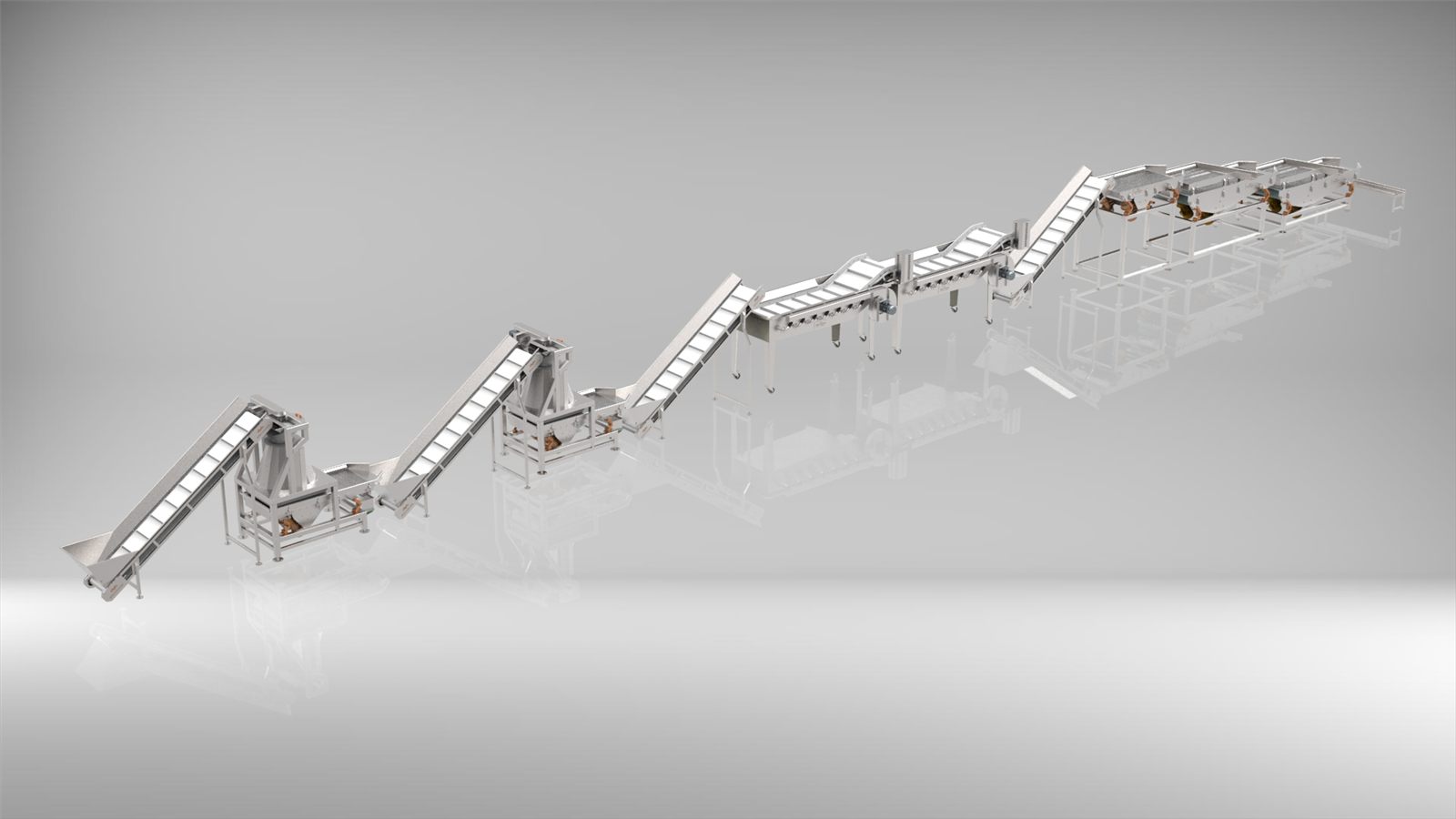
In the Mekatronik Makina date process this stage can be placed before pitting and chopping, because at this point the date still keeps its whole form. Once the pit is out the inner part of the fruit is exposed, so carrying out controlled surface treatments while the product is still intact is an advantage for the process. A typical sequence can look like this:
- 01Balanced feeding
- 02Hair singeing
- 03Pitting
- 04Flouring
- 05Dicing or julienne cutting
Because dates contain a high level of natural sugar, controlling the applied heat is important. Excessive heat or an unnecessarily long exposure can lead to colour change on the surface, local darkening, a change in surface structure and unnecessary heating of the product. The travel speed through the system and the heat applied are therefore balanced against the properties of the date being processed. Hair singeing is not a cutting device on its own, but it is one of the significant processes in the line for preparing the date for cutting and for the visual cleanliness of the final product.
04
Stickiness and the flouring system
Dates naturally contain a high amount of sugar. When the pit is removed, the inner surface of the fruit is exposed and the sticky surface area can increase. Product can then stick to itself and to machine surfaces, the flow becomes irregular and the dates do not all reach the cutting section in the same way.
This is why some date chopping processes use separating aids suitable for food processing, such as rice flour. In Mekatronik Makina dicing and julienne systems, a rice flour application and screening systems for recovering that flour can be integrated into the process according to the project. The aim is not to coat the product in flour but to reduce surface stickiness with a controlled amount and obtain a more stable process.
05
Why does every piece not come out exactly the same size?
In industrial food cutting, the nominal blade dimension and the final size distribution are two different concepts. Using an 8x8 mm blade set does not mean that every piece will be mathematically 8x8 mm, because dates differ in diameter, length, flesh thickness, moisture, pit cavity and level of deformation. A piece cut from the edge of a small date and a piece cut from the centre of a large one will not be geometrically identical. In industrial production the target is therefore not that every piece has exactly the same dimension, but that the highest possible share of the product stays within the intended cutting range.
Blade condition matters as much. A sharp blade cuts the product; a blunt blade starts compressing it before cutting. In soft dates this shows up as crushing, irregular cuts, product sticking to the blade and a higher share of fines. In the dicing machine different blade sets such as 5 mm, 8 mm and 10 mm can be applied according to the product required, but a smaller cut does not automatically mean an easier cut. As the cut size gets smaller, the amount of cutting done on the product, the contact area with the blades and the sensitivity of the process all increase. Very soft and sticky dates need more controlled preparation for small dice.
06
Where do capacity and screening sit in the line?
The capacity of a date chopping machine should not be treated as a single fixed figure. Real capacity is the combination of the date variety, moisture content, product temperature, pitting quality, target cut size and the feeding pattern. Mekatronik Makina systems include date solutions that can reach levels of around 500 kg per hour, but the real production capacity depends on the characteristics of the product and on the final cut quality required. Trials with a sample of the customer's own product are therefore valuable in industrial projects.
Packing the product straight after chopping is not the right method for every application. After cutting, fines, pieces within the target size and oversize pieces can all be present together. With a calibration or screening system the product can be classified according to the commercial specification. The system then stops being a machine that simply cuts dates and becomes a controlled date cube production line.
07
The process order behind a good date cut
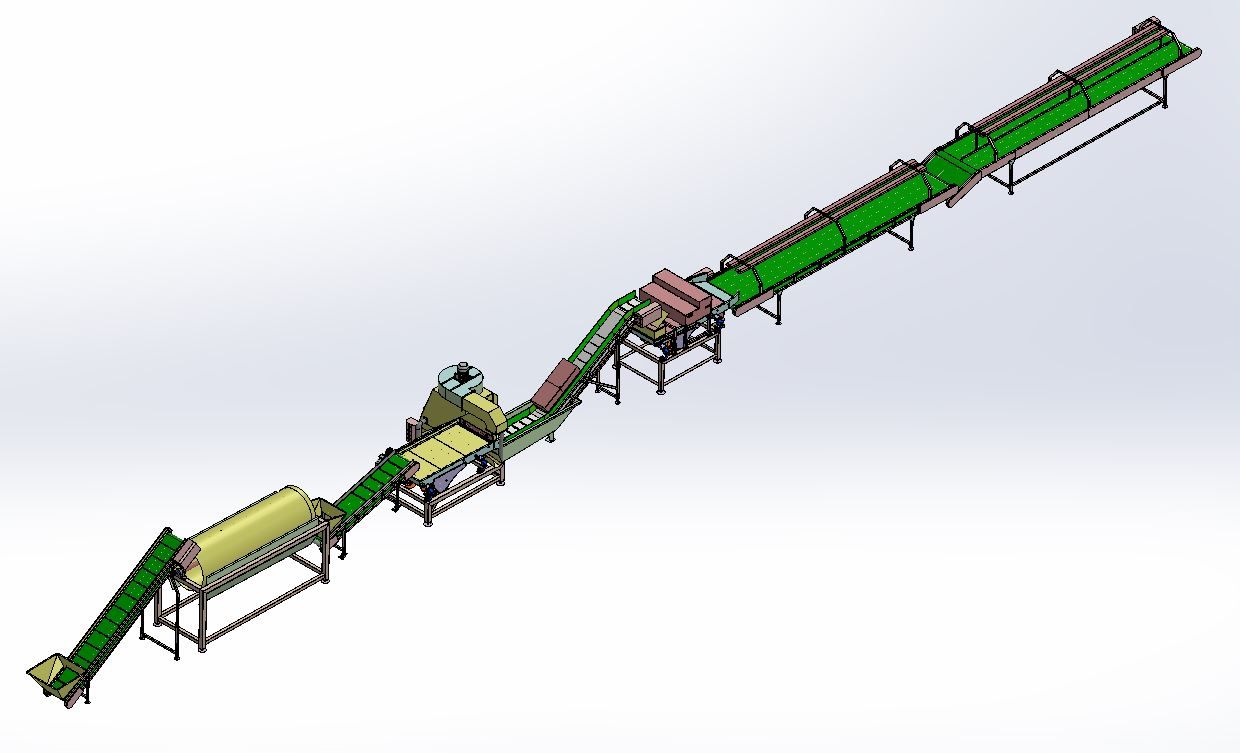
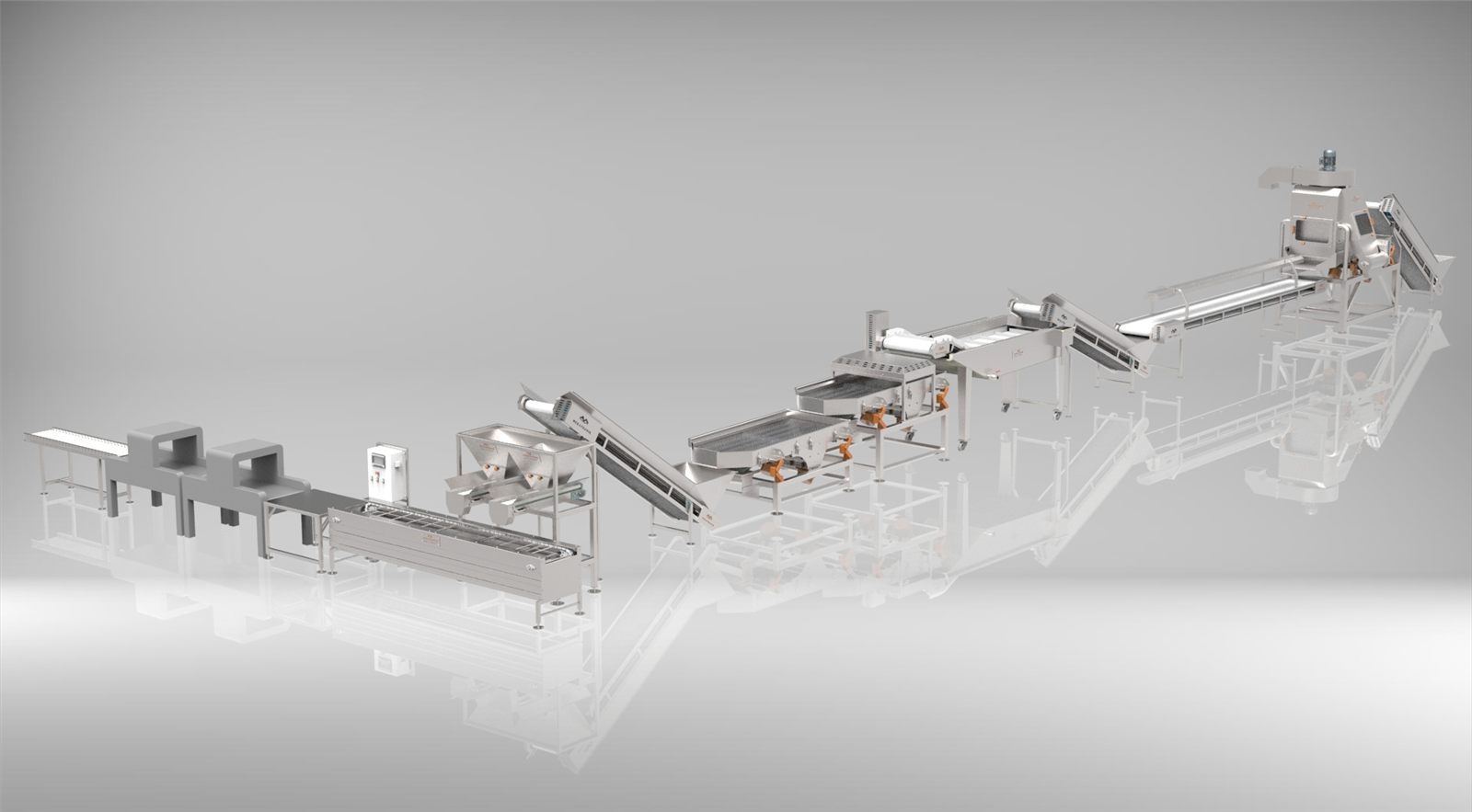
A stable date chopping process can generally be assessed along this chain:
- 01Date intake and product inspection
- 02Balanced feeding
- 03Hair singeing line
- 04Pitting
- 05Flouring system
- 06Dicing or julienne cutting
- 07Screening and calibration
- 08Flour recovery
- 09Weighing and packing
The performance of one stage in this chain directly affects the next. No chopping machine can restore the original geometry of a date that has been crushed in the pitting section. In the same way, irregularities in surface preparation, feeding or the flouring system will show up in the cutting section. Judging cut quality by looking at the chopping machine alone is therefore technically incomplete.
Chopping a pitted date looks like a simple cutting operation at first sight, but it is a process in which many variables are managed together: controlled feeding, correct surface preparation, correct pitting, controlled flouring, the right blade system, stickiness control and the right screening have to work as one. In date projects Mekatronik Makina brings hair singeing, pitting, dicing and julienne cutting, flouring and flour recovery, calibration, weighing and packing together in a single integrated line. To arrange trials with your own product and a line design, share the date variety, the moisture range and the target cut size and request a quotation.